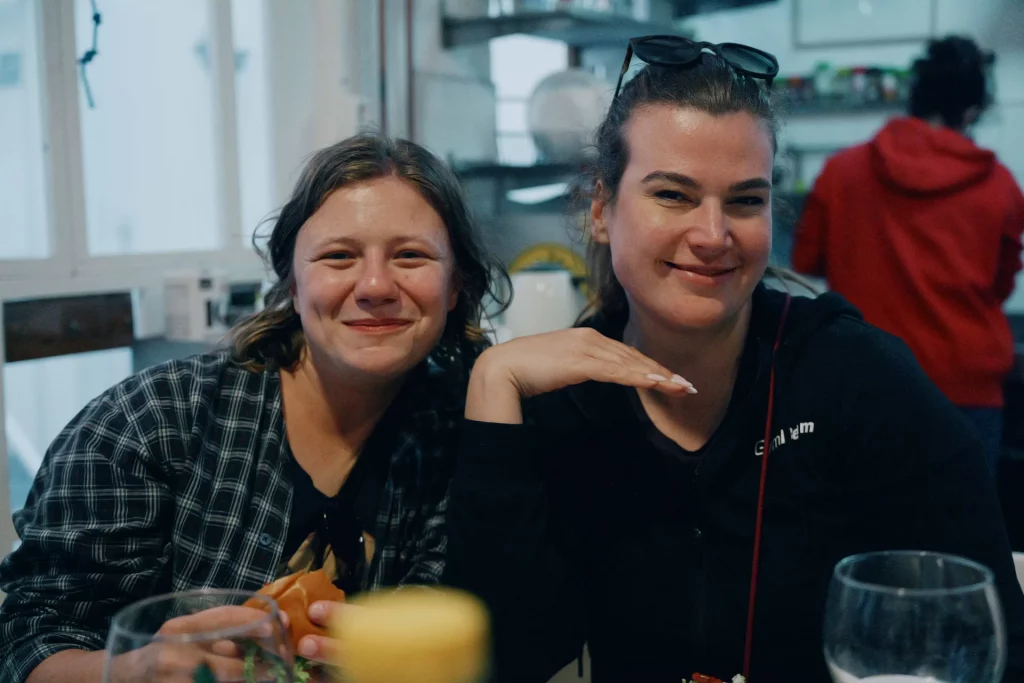
As some of you already know, EcoIsleta is a coliving for artists and remote workers in Las Palmas. It’s a diverse and multicultural space that aims to become a creative and dynamic community. Our dream is to spark inspiring cultural and social dialogues.
A few days ago, we organized a small photowalk around the neighborhood of La Isleta. The activity was a collaboration with a small community of artists, photographers, and designers that our good friend Jeremy Corain is trying to build in Las Palmas.
Contrast
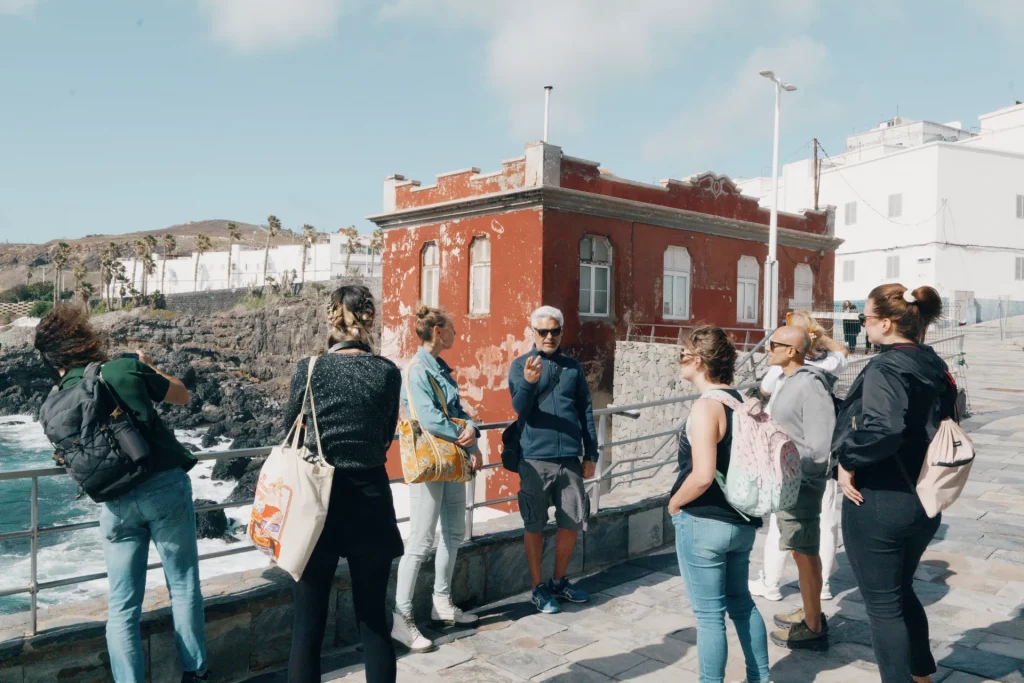
The idea was to walk through La Isleta in search of contrasts. At the same time, I was meant to explain some aspects of the history of our neighborhood. This way, participants could better understand what we were discovering along the way.
Personally, I learned a great deal by talking and understanding how those artists and photographers perceived and observed our neighborhood.
Before the activity, I had many doubts about the existence of those “contrasts” we had discussed while preparing the activity with Jeremy. To be honest, I couldn’t even imagine them.
I have to admit that I was completely wrong about the place where I live. Indeed, La Isleta is full of contrasts, but I had never really seen them. I had never taken the simple step of looking for them.
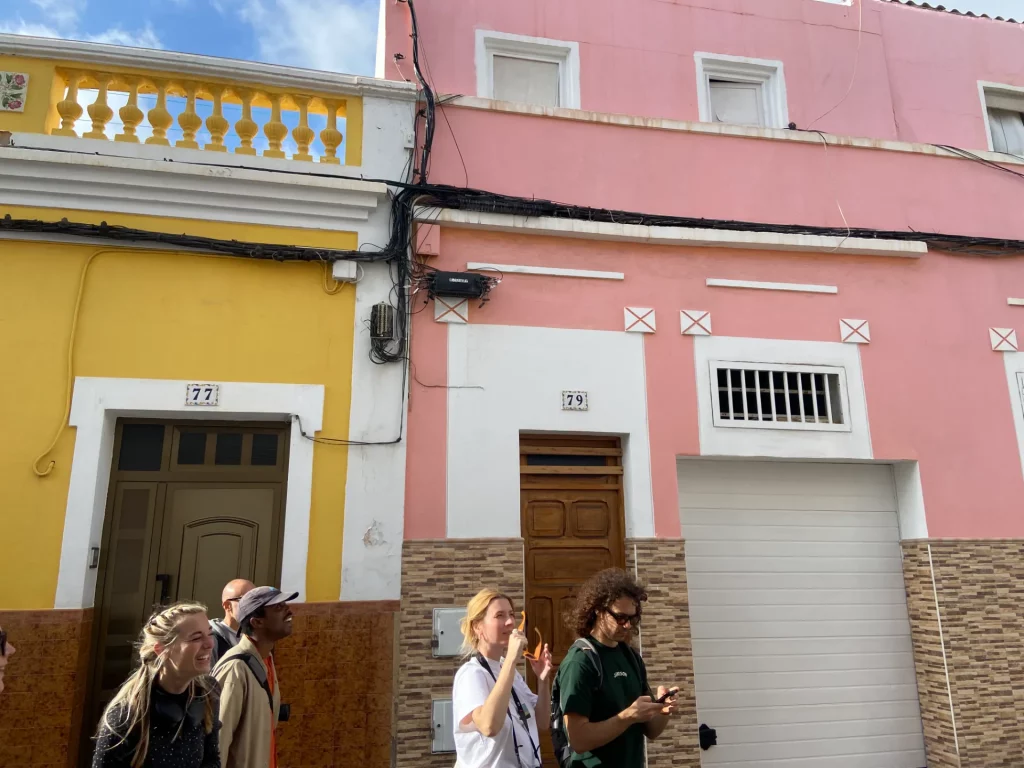
My perspective is so used to where I live that I’m unable to notice what makes us unique and different, such as the colors of our houses. What was contrast, or even color for some, was the most common thing in the world to me.
What’s interesting about these kinds of activities, where we combine different ways of observing and understanding a place or a community, is that the result is tremendously enriching for both sides: for locals and for those coming from elsewhere…
Photographs and perspectives from the participants…
The conversations were incredibly diverse. As a fitting conclusion to the activity, each participant has sent us a photograph and a short text, which you can see in this post.
The same place can be seen in as many ways as there are people discovering it. It is truly inspiring…
Jeremy Corain…
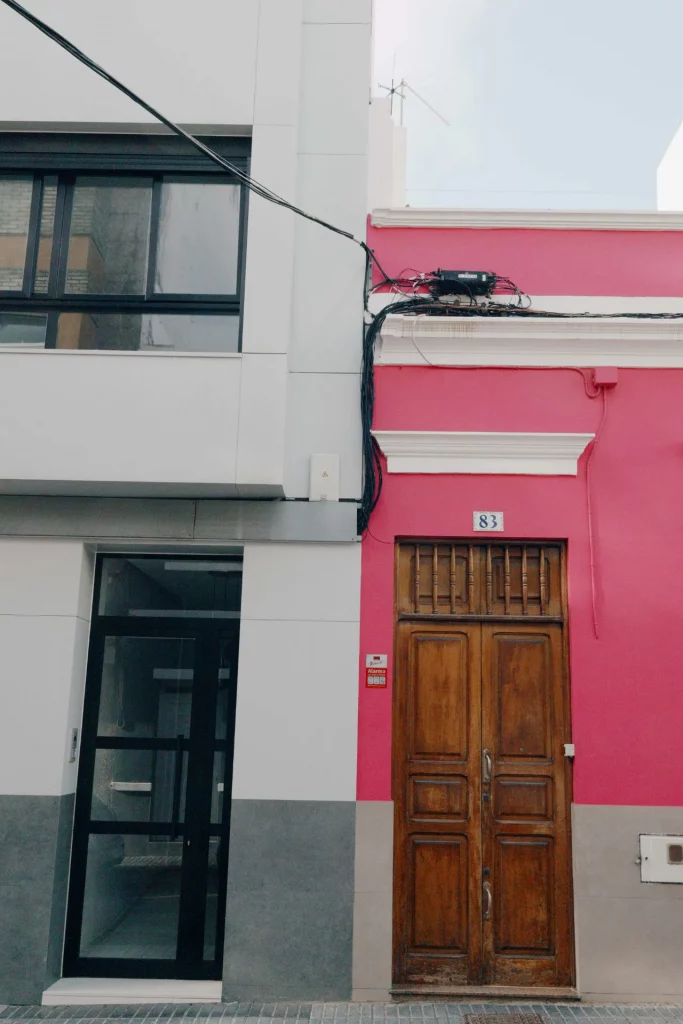
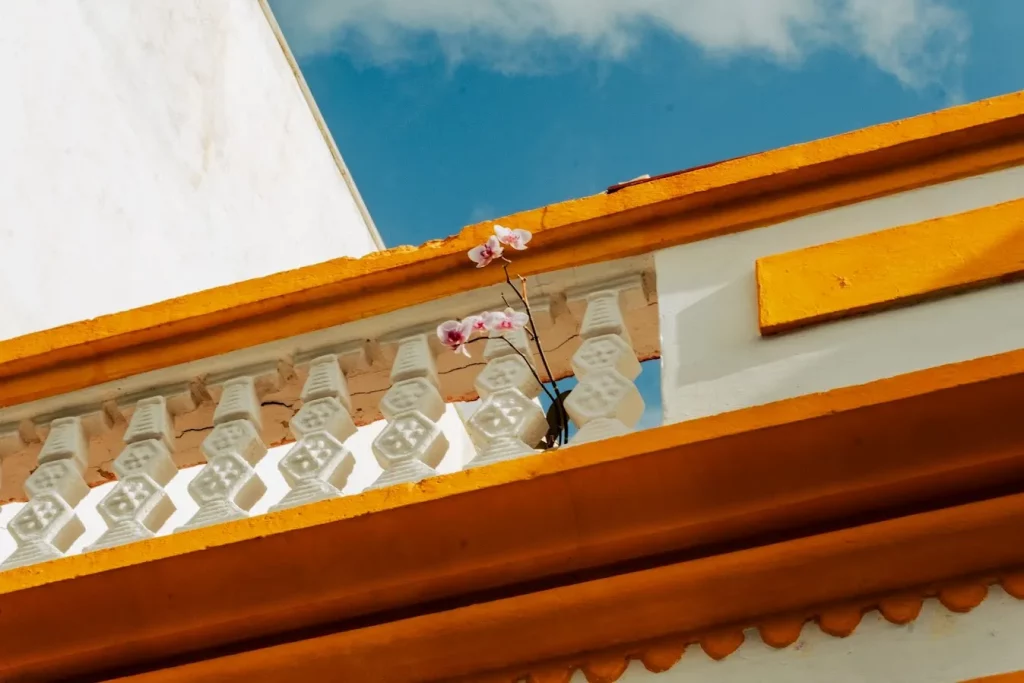
This photo reflects La Isleta as a place caught between two identities: one rooted in tradition, color, and singularity, the other shaped by modern uniformity and functional design.
It raises a quiet tension: how easily character and history can be replaced by standardized spaces, often without us noticing right away.
Isabelle…
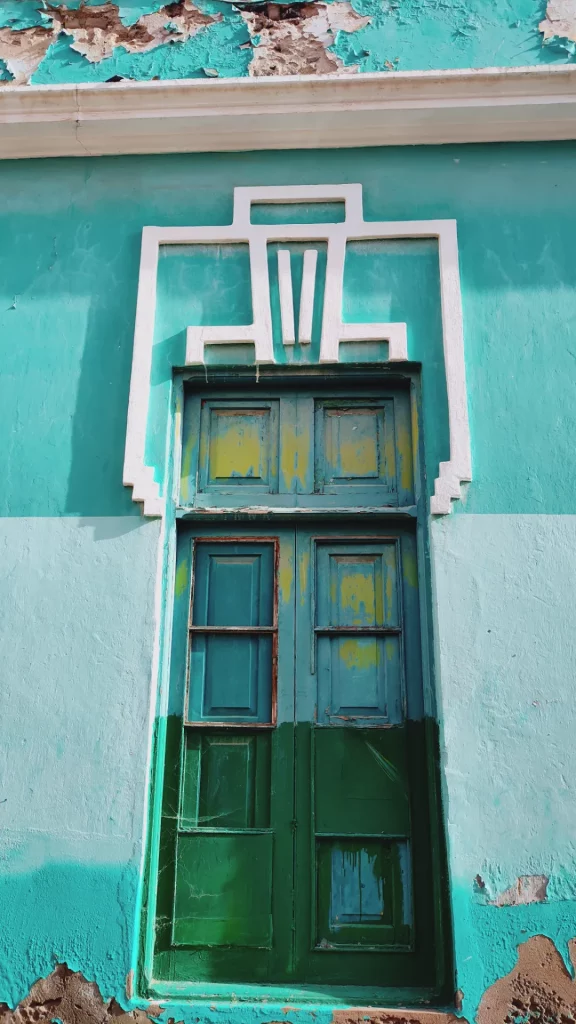
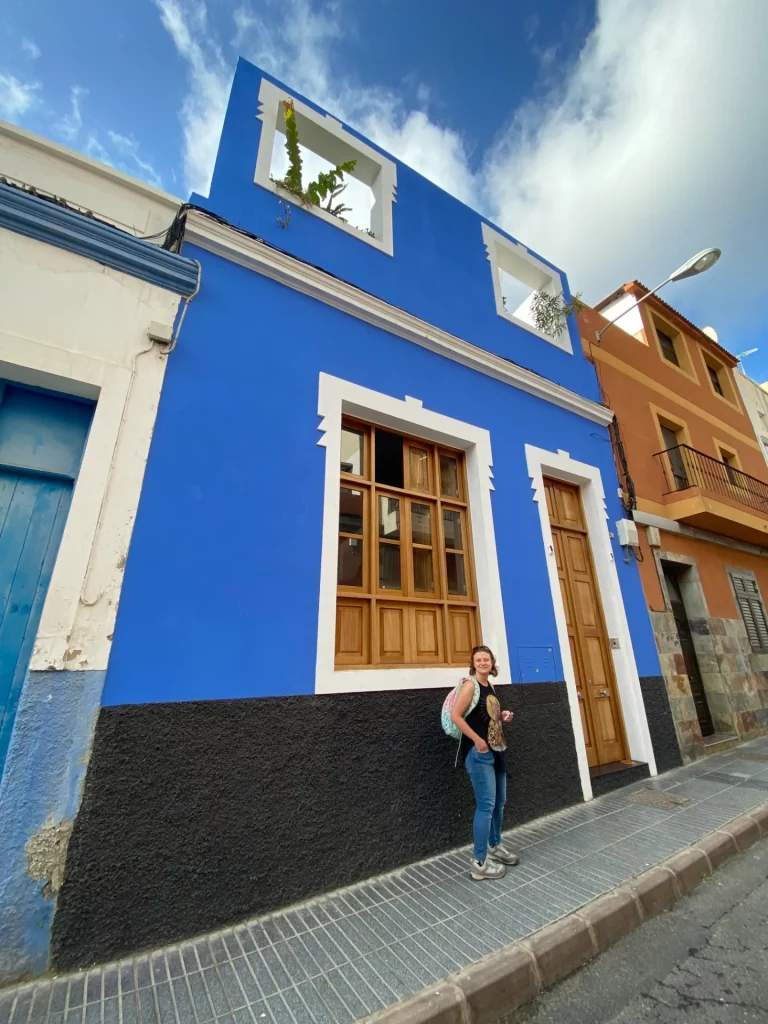
What I found most interesting was that every house was painted in a different color, which reflected the cultural heritage, the family bonds, or just the preference of the owner. I love the idea of letting colors speak. Pedestrians get a first feeling for the people inside of the house, just by walking past. Colors start telling the story that an open door can then continue. But even if we just walk passed, they bring us more joy and brighten our days – especially with the now too-often cloudy weather forecast.
Since I believe that every one sees colors differently, I also like the idea that everyone gets a different picture when strolling through the streets of La Isleta. This is the color that stood out the most too me, that caught my eye by being so vibrant, so rich, so hopeful. Which one stood out to you?
Lucas…
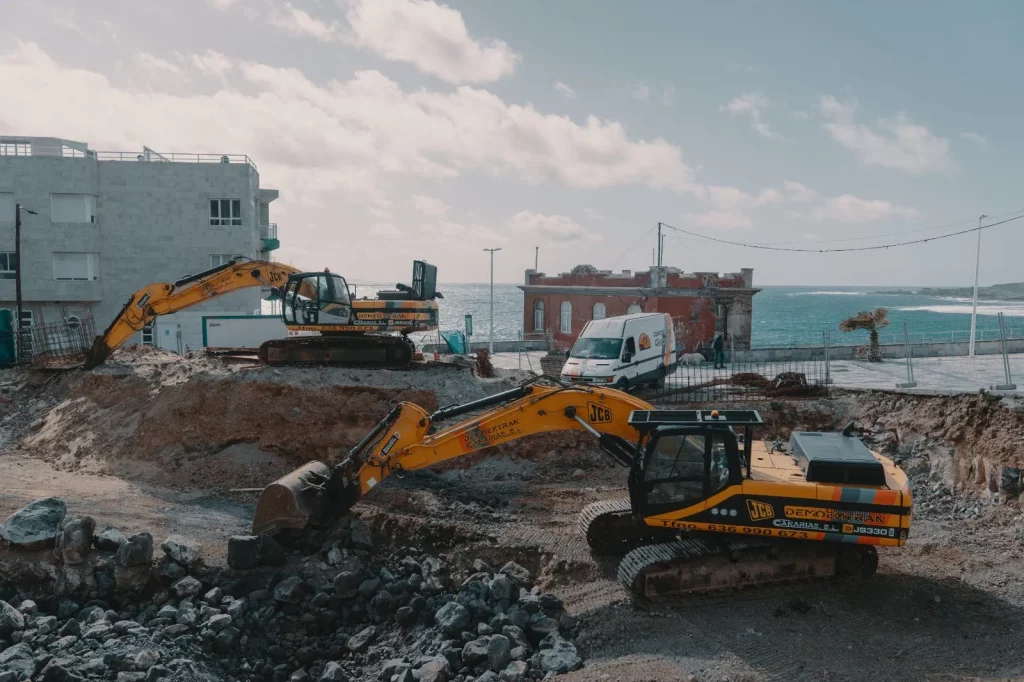
La Isleta, like no other neighborhood of the Island, needs a strong regulation that preserves our identity and our culture. Old houses must be protected, and we must keep the construction style. That is part of our history, our roots, which everyone should know.
Natalia…
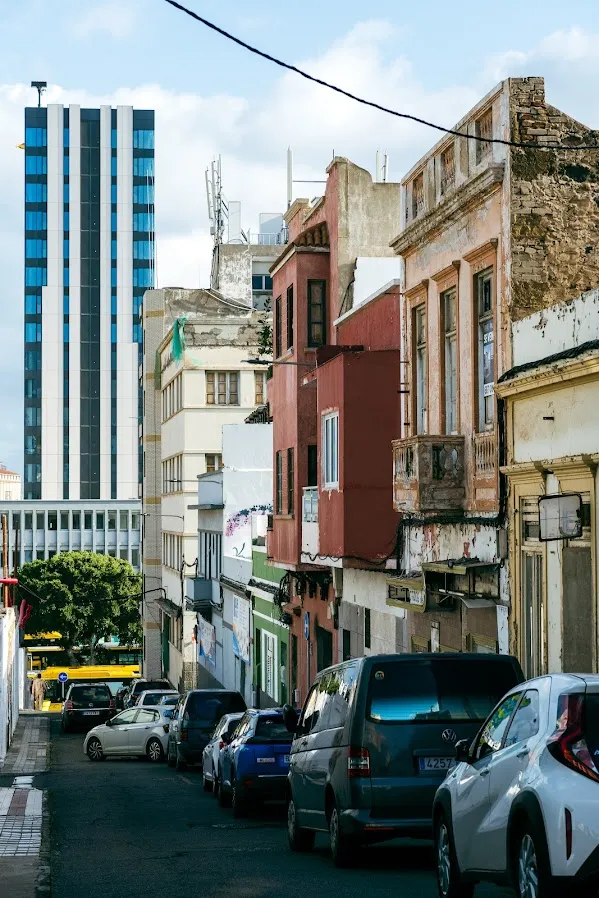
Layers of time pressed into a single frame — crumbling facades and a plastic glass tower sharing the same sky. The old buildings don’t apologize for their decay; they hold their ground with a kind of worn dignity that newness can’t manufacture. This is what a city in transition looks like: not yet one thing, no longer another.
Miko…
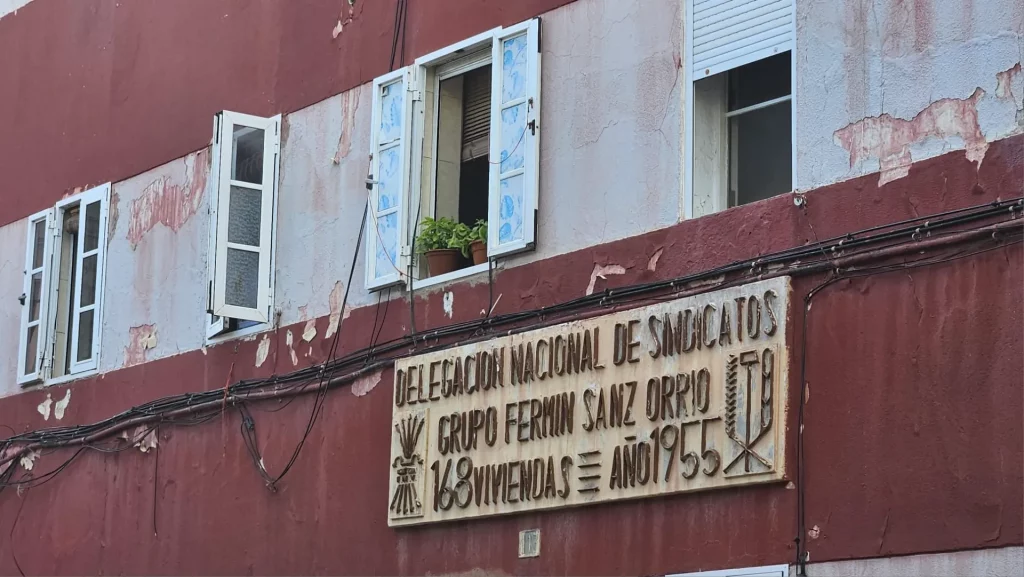
The trip around La Isleta was a great way to see Spanish history reflected in architecture and the way people have lived over dacades of different conditions.
Monika…
I have spent a good couple of weeks walking down those colorful, narrow streets, but I hadn’t had a chance to know the history behind the neighborhood – that is, until Jonatan invited us to a walk and explained its origins.
From the strange signs on a street sign, that were in fact displaying the name of the road in the language of Free People, through the worn-down Red House on the seashore, which amazingly once put a stop to all kinds of epidemics the inhabitants suffered from just a hundred years ago, and finally a social house built by the workers, we got to know the stories and meanings hidden in different parts of La Isleta.
When most of the district is covered in narrow streets, built by people settling one after another with no greater plan, we walked into Plaza del Pueblo, the only spacious part. Once the locals had gathered together to buy the land and create a space to meet and socialize. They shed their blood fighting against the regime. Now it’s a rooftop of a parking – with a small cafe and a room for table tennis. Still, it leaves a kind of bitter aftertaste.
Don’t the people deserve a patch of greenery, just a small pocket park, instead of a concrete-covered square?
But what does the future hold? The last stop was in the part that had been deliberately neglected – where once you could see prostitutes and drug addicts in the street – now being demolished to make space for new skyscrapers. As posh and elegant those look, is it a good idea to squeeze it into a space already dense with buildings, but no other infrastructure?
What about the character of the neighborhood, where every single house reflects the soul of the resident, each in different colour and style?
Kim…
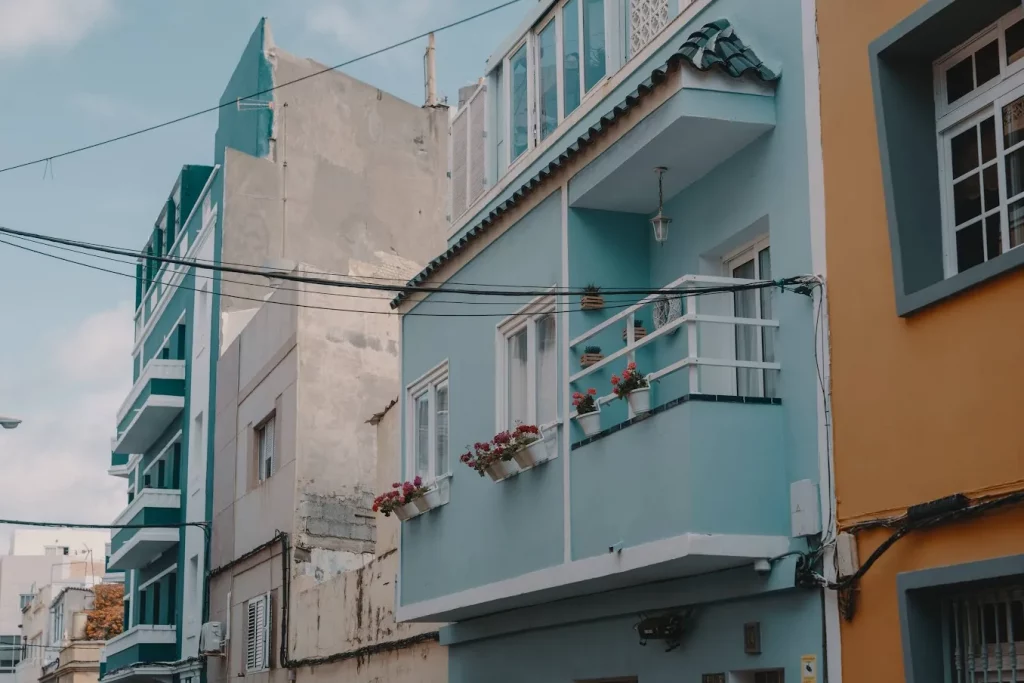
I truly enjoyed the entire guided walk and the authentic stories from the neighbourhood. One of the things that stayed with me was how beautifully history is reflected in traditional Canarian houses.
Jonatan explained how the entrance used to be a lively social space. Doors open, people sitting in the entrance, always ready to welcome neighbours passing by. Meanwhile, the inner patio served a surprising purpose: it was where goats were kept, back when traveling with them was part of daily life.
The way Jonatan shared these details, with such enthusiasm and warmth, made it easy to picture it all so vividly. It brought the past to life in a way I won’t forget.
Dinner
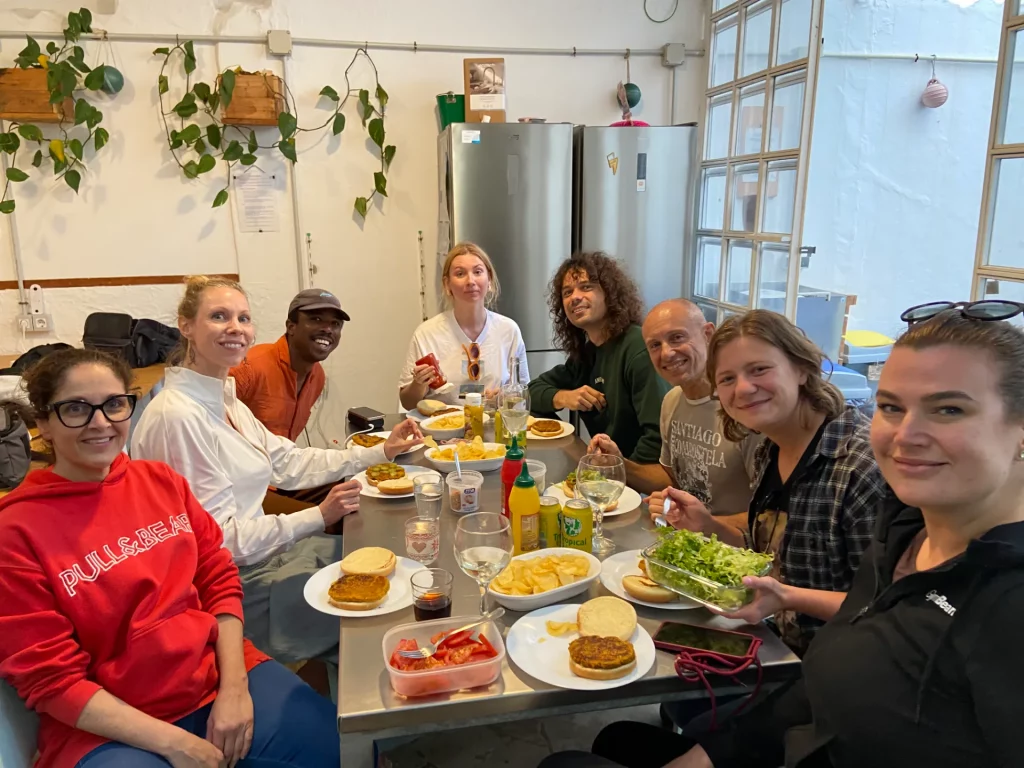
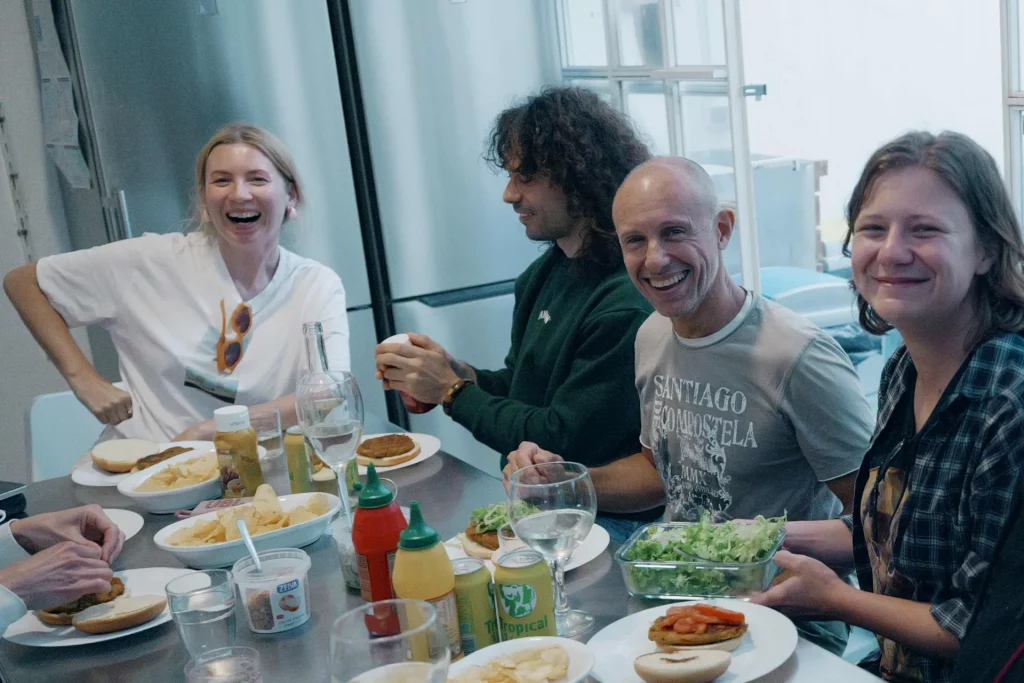
After a photowalk full of contrasts and inspiring conversations for each of us, we had a small dinner at our coliving for artists and remote workers in Las Palmas.